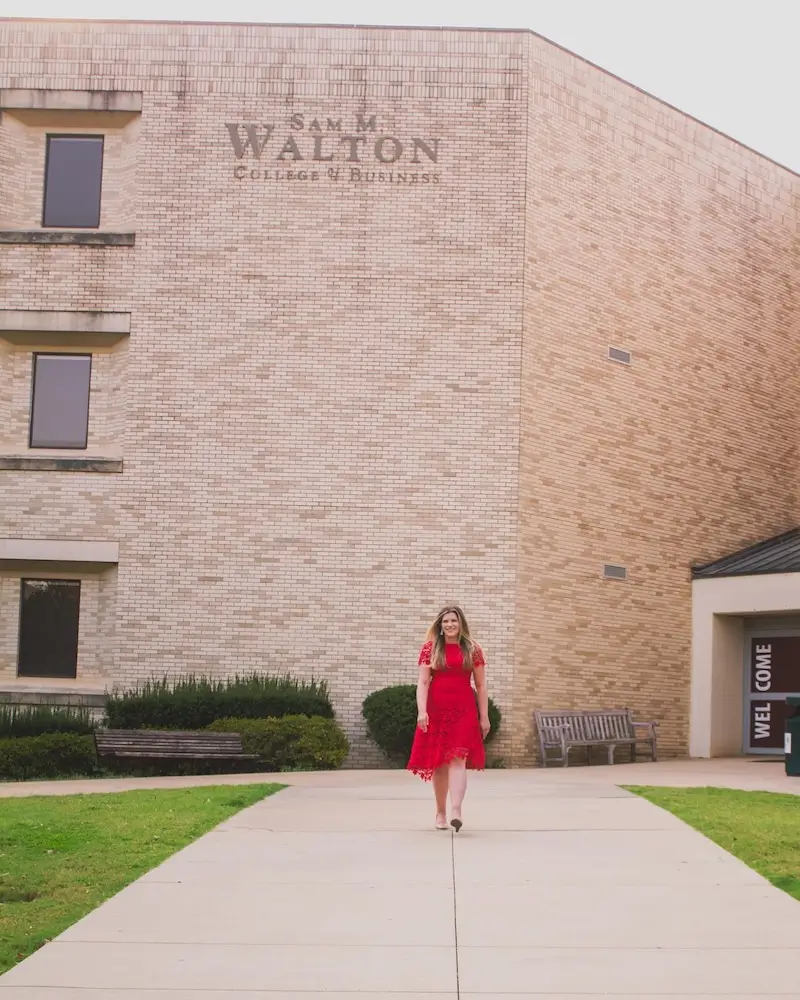
I’m a two-time alum of Sam M. Walton College of Business at the University of Arkansas (both my BSBA and MBA). So when then-Dean Matt Waller brought me in to lead the digital marketing and communications transformation of the Walton College in 2021, I did not view it as just a professional opportunity, I saw it as a chance to shape how a place I genuinely care about tells its story. That context matters, because it shaped how I approached every part of this work.
Then-Dean Waller already knew what needed to change. My job was to build the strategy, the team, and the systems to make it happen.
The Walton College is a nationally ranked public business school serving a wide range of audiences: students and parents (current and prospective), alumni, donors, faculty and staff, board members, and industry partners. The stakes for getting marketing and communications right are high. But the function had grown around what was familiar, not what the moment required.
Marketing and communications were primarily built around traditional tactics (press releases, print materials, one-off messaging) with little emphasis on digital strategy or performance measurement. The social media presence was fragmented across 80+ accounts with no unified approach. Email communications varied widely across stakeholder groups. The Dean and senior leadership had limited digital visibility. And the team was undersized relative to what the College was trying to accomplish.
Then-Dean Waller recognized that the Walton College needed a modern, digital-first marketing and communications function, one that could support the College’s growing ambition and operate as a trusted strategic partner to leadership, not just a service function producing output.
My first move was listening. Before changing strategy or building anything new, I went directly to the people the College was trying to reach: students, faculty, staff, alumni, donors, and board members. I wanted to understand their actual impression of the Walton College, how they were interacting with us, and where the gaps were. I even partnered with one of the Walton College’s own marketing classes for an entire semester, making their capstone project a real question: how would you change the marketing and communications of the Walton College for students? That kind of grounded, audience-first approach shaped everything that came after it.
Then I built the team to execute it. I grew the marketing and communications team from 4 people to 15, which meant building roles and structures, not just filling seats.
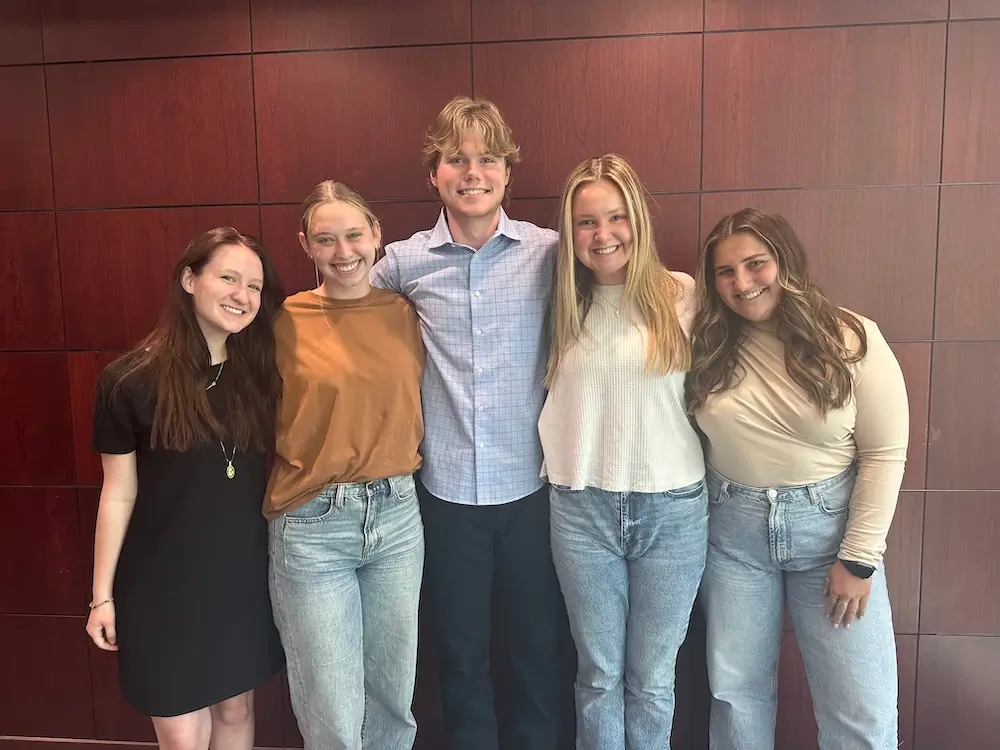
Our fantastic first cohort of interns - Ella, Olivia, Ben, Abby and Lauren
I then consolidated the social media environment from 80+ accounts down to approximately 40 and shifted the approach from ad hoc posting to a deliberate strategy focused on thought leadership, institutional narrative, and stakeholder engagement, particularly on LinkedIn and Instagram.
I also introduced the systems that made disciplined operations possible. That included a social media management tool to support planning, publishing, and performance tracking across channels, an AI-assisted email writing tool that helped the team craft smarter, more concise communications that actually drove engagement, and a media monitoring platform that gave us visibility into our mentions across the web, the top authors writing about us, and how our coverage was trending. I also built analytics into everything we did, so the team had real data to guide decisions rather than relying on instinct alone. None of this is glamorous work, but it’s the foundation that separates a reactive function from a strategic one.
In our analytics we noticed a number of improvements that needed to be made on the website so I empowered and supported my team through a full redesign of the Walton College website (homepage, navigation, information architecture, and platform migration), ensuring it was built around the needs of the key audiences who actually visit it, rather than functioning as a static brochure.
I built structured email communications for every major stakeholder group: students, faculty and staff, alumni, board members, and the Dean’s direct communications, each designed around what that audience actually needed to hear and when.
And I worked closely with two Deans to develop their executive communications presence, particularly on LinkedIn. A leader with a clear, credible digital voice strengthens the institution around them. That work matters, and I take it seriously.
On the operations side, I made the difficult call to part ways with an agency partner that wasn’t delivering, which freed up budget and allowed us to redirect resources toward what was actually working. Combined with improved planning and vendor oversight, that resulted in $426K in first-year budget savings without cutting the work that mattered.
The results built steadily over time. By 2025, the Walton College was generating 500+ million annual impressions. LinkedIn followers grew from 7,583 to 26,541. Instagram went from 3,668 to 15,378. For Dean Waller and his LinkedIn presence under my management, we achieved 600% year-over-year engagement growth and approximately 1.5 million LinkedIn impressions in a single year. For the dean who followed him, we achieve a 909%+ year-over-year reach growth and doubled his following in just over 2.5 years.
Here is the TLDR version of the results:
Digital & Audience Growth
Executive & Dean Visibility
Email & Stakeholder Communications
Infrastructure & Operations
Higher education doesn’t give you a clean slate. You are working within shared governance, limited resources, legacy systems, and public accountability. Progress has to be thoughtful, not just bold.
What I am proud of here isn’t just the numbers, it’s that marketing and communications became a trusted strategic partner to the Walton College leadership, not just a service function producing output. That shift is harder to achieve than any metric, and it’s the one that makes everything else sustainable.
It’s also exactly the kind of work I bring to Blue Iris clients: senior-level judgment, systems thinking, and a long-term view on what it actually takes to build something that lasts.